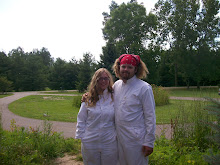
My fiance, Keith and I have decided to become beekeepers. Not only become beekeepers, but to make it our career, our passion. I don't know what it really was that drew us into creating a business out of it, but our idea is to keep honey bees more naturally, focus on their health and the production of flowers and crops for the bees to pollenate, rather than keeping the bees for solely honey production. Although we do have plans for some if that honey we're going to harvest. With that excess honey, we plan to create mead, the oldest fermented beverage in the world. If you're looking for an adequate depiction of vikings consuming mead look at the movie Beowolf. Or visit
http://www.gotmead.com/ . We currently brew beer and mead as a hobby and have entered it in international, as well as state, competitions. Not only will we receive happy bee's and honey from our hives, we will also harvest a great deal of excess wax, and with that wax we can sell it as-is, create candles, soaps, lotions, and chapsticks, etc. Not to mention, use the wax for future beehives as we grow and expand our way of life!
We began keeping bees in spring of 2008. We purchased a nucleus hive from Time and Kathie Bennett of Turtle Bee Honey Tree Farms (
http://www.turtlebeefarms.com/ ) and began an adventure that has changed our lives. They have been very helpful with our beekeeping venture and always available for questions and supplies. Our first hive did not make it through the winter, and we were left heartbroken. To see an empty hive and realize the lives inside are no more is sad, like your pets, your babies are gone. But luckily, one can pick up where they left off. Keith and I began doing research on a more natural approach to beekeeping, and looking at alternate hive designs that could possibly effect the bee's productivity and lifestyle. We began looking at the Top Bar Hive (Also called TBH) It is currently used more popularly outside of the United States, with similar designs that have been traced to both Africa and Rome. We obtained blueprints online and did further research about not only the benefits of the top bar hive, but also some of the concerns associated with the modern Langstroth hive design. This winter Keith and I attended the Michigan Beekeeper Association's annual beekeeping conference at MSU and learned a great deal about handling bees, collecting swarms, installing packages and harvesting honey. One sad thing about using a new hive design, is that most American beekeepers like to use universal equipment, and reuse it year after year. Many currrent beekeepers conform to standard designs and do not support using new or improved hive designs. Keith and I were full of information, yet discouraged at the lack of information available to us about different methods for keeping bees.
Colony Collapse Disorder is alive and prominent across most of the world, and there are definite factors that are contributing to it. We believe that not only are pesticides an issue but we as humans are a cause to this disease as well. Our population, our pollution, our increase in roadways and decrease of mass transport are factors that leave humans with room to reign, but not the honeybee. We have become obsessed with mass agriculture and record breaking honey harvests and it's killing the thing we depend on to pollenate our foods.
Over time I intend on keeping a blog about the ways of beekeeping. I'll include pictures of our hives and mark their progress. We will be keeping strict records of all of our bees to insure that we're doing all we can to save the honey bee. For further information about our bees, or our mead, feel free to email me, or call our office at 734-449-8437. I hope this has been informative and I will be posting our progress regularly! Save Apis Mellifera (the honeybee)!