So it was only a matter of time before we transitioned from just capturing feral swarms, to capturing a swarm that has established itself in a crevice of some sorts. Tuesday we got a phone call from Walter Pet. He's the head of entomology (study of insects, pollinators, etc) at MSU, and there was an established colony in a boarded up window of a martial arts academy! The coolest part about capturing a colony is that it is already established, meaning it already has drawn out wax comb cells with capped honey and brood in it! This is a good sign of a strong swarm and a good queen! The great thing about capturing this particular colony was that they were inside a window in a storage closet that had been boarded up, therefore it becomes an observation hive! We got to see the entire colony before opening it up and cutting it down!
We went in through the basement and looked at the colony, then it was off to work. The first step was removing the caulk and getting the plywood board down. We noticed that they had built comb long-ways in the hive from the inside, but when we removed the board, we noticed that they had built some extra starts of foundation in between the metal grate and onto the plywood!
Keith was like a superhero pulling the wood off the window and getting the grate off, then he went straight to work on getting each of the frames of wax down. They were well established, but probably had not been in that space for a long period of time. Sometimes, the progress of the honeybee can be astounding, but they can work mighty fast. I estimate that the colony had only been there for a month of two and had made a strong colony with good brood in that short period of time.
One issue we did run into when capturing an established colony is you cannot expect a feral colony to build all of their honey and brood cells to fit magically into the frames you'd like to transport them into. We ended up having to brush all of the occupying bee's into the hive body, cut down the entire comb, and cutting that down to string into different frames for the bee's to reattach. Over a short period of time, the bee's will take the cells that we had tied in there with cotton twine and reattach it with burr and bridge comb, and then they will cut the twine away and remove it from the hive! (Above is a picture of me holding a top bar frame with some established comb on it, and to the left, you can see some comb has been tied on with green string for them to reattach.)
We tried taking pictures of the capture, but unfortunately they did not turn out! Call us old-fashioned, but the only way to justly document our progress is on a real 35mm FILM camera!
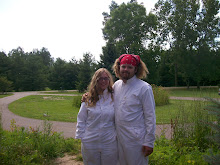
We also feel more professional because we did break down and buy bee brushes and coveralls. The coveralls coming to the house was the first piece of official mail that has come addressed to Steller Apiaries! It's a small step but I'm easy to please! I'm also pleased my mom can sew and has the awesome ability to make patches, it'd be so cool to have company patches that say "Steller Apiaries" in a honeycomb pattern with my name on it and Velcro to close up my pant legs and arm sleeves; we've discovered those bee's like to climb!!
I hope every one's garden is coming along nicely, the rain has been healthy for our little green plants as well as for encouraging our lovely honeybee's to swarm! I'm excited to see what we harvest out of our hives as well as our multiple garden's this year with a grand total of 12 hives!!! TWELVE!